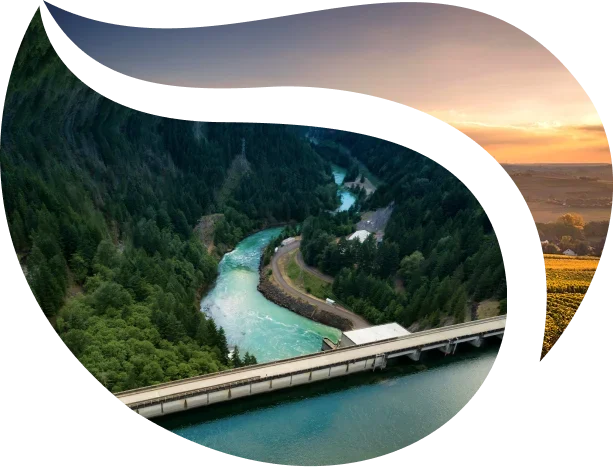
RNRF is proud to share the recipients of the 2025 RNRF Grant Program. Each of these projects represents a meaningful contribution to advancing RNRF’s mission through collaboration, applied research, and community engagement.
RNRF awarded 2025 grants across three categories, each designed to support projects at different stages of development:
- Rapid Response Grants, which provide short‑term support to organizations directly impacted by the loss of federal funding, helping fill critical gaps, complete essential components, or responsibly close out federally supported work.
- Planning and Small Grants, which support early collaboration, project conceptualization, and targeted efforts limited in scope and budget.
- Implementation/Collaboration Grants, which fund the implementation of research and evidence‑based practices through collaborative projects lasting 12 months or more.
Congratulations to the 2025 RNRF Grant Recipients
Caribbean Regenerative Community Development: “Forest Bridge”
Rapid Response Grant

The Forest Bridge initiative, led by CRCD, helps private forest landowners in Puerto Rico restore degraded lands near state forests and ecological corridors by addressing erosion, soil depletion, and other threats to forest health, biodiversity, and water quality. Through reforestation, erosion control, liana management, and technical training, the program advances regenerative agriculture, sustainable land management, and community education. The initiative also strengthens local and regional economies by expanding market opportunities for forest products while delivering measurable outcomes such as restored forests, stabilized soils, improved watersheds, and enhanced biodiversity.
A member of the grant team is affiliated with American Geophysical Union.
Casey Trees: “Hillcrest Community Forest: Community-Driven Conservation and Stewardship Planning in DC’s Ward 7”
Implementation/Collaboration Grant

The Hillcrest Community Forest Conservation and Stewardship Planning grant will develop a comprehensive community-driven stewardship plan for an urban forest in two of DC’s most under-canopied and underserved areas. Through 12 months of intensive community engagement, Casey Trees will partner with DC Parks and Recreation to create detailed plans for transforming this preserved forest into a community asset that addresses Ward 7’s critical needs for green space, stormwater management, and recreational opportunities.
A member of the grant team is affiliated with American Geophysical Union.
Michigan State University: “Planning a Collaborative Project for Lake Sturgeon in Michigan’s Inland Waterway System”
Planning and Small Grant

This planning grant will convene partners to design a collaborative acoustic telemetry project and conduct pilot range testing of receivers to evaluate performance of Lake Sturgeon across depths, habitats, and seasons. Outcomes include prioritized research questions, range-testing results, and a draft research plan to support future implementation funding.
A member of the grant team is affiliated with Society of Environmental Toxicology and Chemistry.
Rural Action: “Whole Farm Project”
Rapid Response Grant

Rural Action will facilitate a farm mentorship program and workshops to support small-scale farmers in Appalachian Ohio as they build farm businesses which support people, planet, and profits. By economically uplifting farms through mentorship and business planning, we will promote a kind of agriculture which improves soils, watersheds, and biodiversity.
A member of the grant team is affiliated with American Water Resources Association.
Sitka Sound Science Center: “Salmon Gardens”
Implementation and Collaboration Grant
The Salmon Garden Project aims to address supply chain issues by composting abundant hatchery return salmon carcasses, normally discarded as refuse, to produce liquid fertilizer and organic compost for personal and community gardens. This project will engage students, educators, and community members in a collaborative and educational process that emphasizes the integration of aquatic and terrestrial renewable resources to enhance food security and strengthens relationships within and across our community, enhancing understanding of utilizing renewable resources to support community needs.
A member of the grant team is affiliated with American Geophysical Union.
Tower Foundation of San Jose State University: “Cycling and Remediation of Toxic Metals in Wetlands Following the World’s Largest Battery Fire”
Planning and Small Grant

This project seeks to quantify heavy-metal contamination pathways and persistence in Elkhorn Slough marsh soils and uplands following the January 2025 Moss Landing lithium-ion battery fire and translate findings into a remediation-ready framework. It will provide lasting community benefits by grounding concerns about contamination in transparent, evidence-based science and offering a transferable toolbox for other ecosystems facing similar risks as large-scale battery storage expands globally.
A member of the grant team is affiliated with American Geophysical Union.
Valparaiso University: “Integrating Soil, Water, and Atmospheric Monitoring to Evaluate Ecosystem Restoration and Regeneration”
Planning and Small Grant
This project seeks to understand how wetland restoration and restorative agriculture in Northwest Indiana modify the local microclimate by integrating measurements across the soil-atmosphere interface. It will examine how ecosystem restoration and regenerative agricultural practices both influence the land-atmosphere system and their implications on human comfort as determined by the combination of temperature and humidity.
Members of the grant team are affiliated with American Meteorological Society or American Society of Civil Engineers.
Thank You to Our Scientific Review & Impact Committee Members
The RNRF Scientific Review & Impact (SRI) Committee provided expert guidance to shape the Foundation’s grant program by helping define its focus areas and guiding principles. Committee members contribute disciplinary and organizational perspectives, offer feedback on scientific rigor and feasibility, and help ensure the program aligns with RNRF’s mission and intended impact. Collectively, the committee supports the development of a clear, credible framework to guide funding decisions and measure success. Committee members represented each member organization and were nominated by RNRF Board of Directors.
Ashanti Edwards
AGU – Ethics and Organizational Advancement
Mona Behl
AMS – Director of Georgia Sea Grant, Research Professor, Virginia Institute of Marine Science
Cris Q. Surbeck, PhD, PE
ASCE – Senior Associate Engineer, GSI Environmental
Michele Palmer Templeton
ASLA – Owner, Templeton Landscape Architecture & Planning
John Balay
AWRA – Manager, Planning & Operations at Susquehanna River Basin Commission
Tamar Schlekat
SETAC – Executive Director